



Luxury EDC: A Guide to the Finest Everyday Carry Objects
|
Time to read 10 min

|
Time to read 10 min
There is a certain kind of person who notices the weight of a pen before they write with it. Who runs a thumb across the cap of a lighter not to check the fuel, but simply because the feel of it is worth pausing for.
Everyday carry, at its finest, is not about gear — it is about the objects you choose to live with, and what that choice says about how you move through the world. Luxury EDC takes that idea seriously: the belief that the things closest to you deserve to be the finest versions of themselves.
This guide is for the collector who has already moved past the practical and is now asking a harder question: what does it mean to carry something truly well-made?
Table of Contents
Everyday carry refers to the small collection of objects a person keeps on them at all times — chosen not just for function, but for quality, longevity, and the satisfaction of reaching for something that feels exactly right.
For those who take it seriously, EDC becomes a practice in intentionality — the same objects, carried with purpose, every day.
Luxury EDC takes that idea further: the belief that the things closest to you deserve to be the finest versions of themselves.
Everyday carry—often abbreviated as EDC—refers to the small tools and personal items people choose to keep with them throughout the day. These objects are selected for their usefulness, reliability, and readiness—items that are always within reach when needed. For some, everyday carry consists of simple essentials like a pocket knife, flashlight, or lighter. For others, it becomes a carefully considered collection of tools and accessories chosen to make daily life more convenient, prepared, and enjoyable.
For those who take it seriously, however, EDC becomes something more deliberate: a curated set of tools and objects chosen not only for function, but for quality, longevity, and the quiet satisfaction of reaching for something that feels exactly right.
The practice itself has roots in utility. Tradesmen, soldiers, and travelers have always carried the essentials their daily lives demanded. What has changed over time is the intentionality behind those choices.
Today’s EDC enthusiast thinks carefully about every object in rotation, asking not only whether something works, but whether it works beautifully. A pen that writes well is simply a pen. A pen that writes well, feels substantial in the hand, develops a patina over years of use, and can one day be handed down—that is EDC.
It is a small hobby, but one with a surprisingly long philosophy behind it.
Ask someone why they carry what they carry and you will get a different answer every time. For some it is preparedness — the quiet confidence of having what you need before you need it. For others it is ritual: the same objects, placed in the same pockets, in the same order, every morning. There is something grounding about that. In a world that moves fast and changes constantly, your carry stays the same.
But there is a deeper reason most EDC enthusiasts eventually arrive at, even if they do not say it out loud: the objects you choose to live with are a reflection of how you value your own time and attention. A lighter that sparks reliably. A pen that does not skip. A knife that opens cleanly. These are small things, but small things happen dozens of times a day. Multiply that by a lifetime and the quality of those moments adds up to something meaningful.
There is also the collector's instinct — the pleasure of finding the best version of a thing, understanding what makes it the best, and then actually using it rather than putting it behind glass. EDC sits at the intersection of function and appreciation. That is what makes it different from gear culture, and what makes it endure.
Luxury EDC builds on the foundation of everyday carry by emphasizing craftsmanship, materials, and design. Rather than relying on disposable tools or mass-produced accessories, luxury everyday carry focuses on pieces made with intention—machined metals, refined mechanisms, and objects designed to age beautifully with use. These are items chosen not only for their utility, but for the quiet satisfaction that comes from carrying something thoughtfully made.
Luxury in everyday carry is not about price. It is about the decisions behind an object—the choice to use brass instead of zinc alloy, to machine a hinge to tolerances that will still feel smooth twenty years from now, to finish an edge by hand when a machine would have been faster. These are decisions the person carrying the piece may never consciously notice. That is precisely the point.
What separates a luxury EDC piece from an ordinary one is intention. Every detail has been considered: the weight distribution, the surface texture, the way a cap threads or a mechanism deploys. The materials chosen are not incidental—they are the argument. And for the serious enthusiast, learning to read those materials becomes part of the reward.
For the serious collector, material literacy is everything. Knowing what something is made of — and why — is the difference between buying an object and understanding it. What follows is not an exhaustive list, but an entry point into the metals worth knowing.
Brass and copper are perhaps the most beloved materials in EDC. Both are living metals, developing a patina that is entirely their own. Brass is dense and warm to the touch. Copper is more dramatic, oxidizing and shifting in color with use. A piece carried for a decade tells a story no new object can.
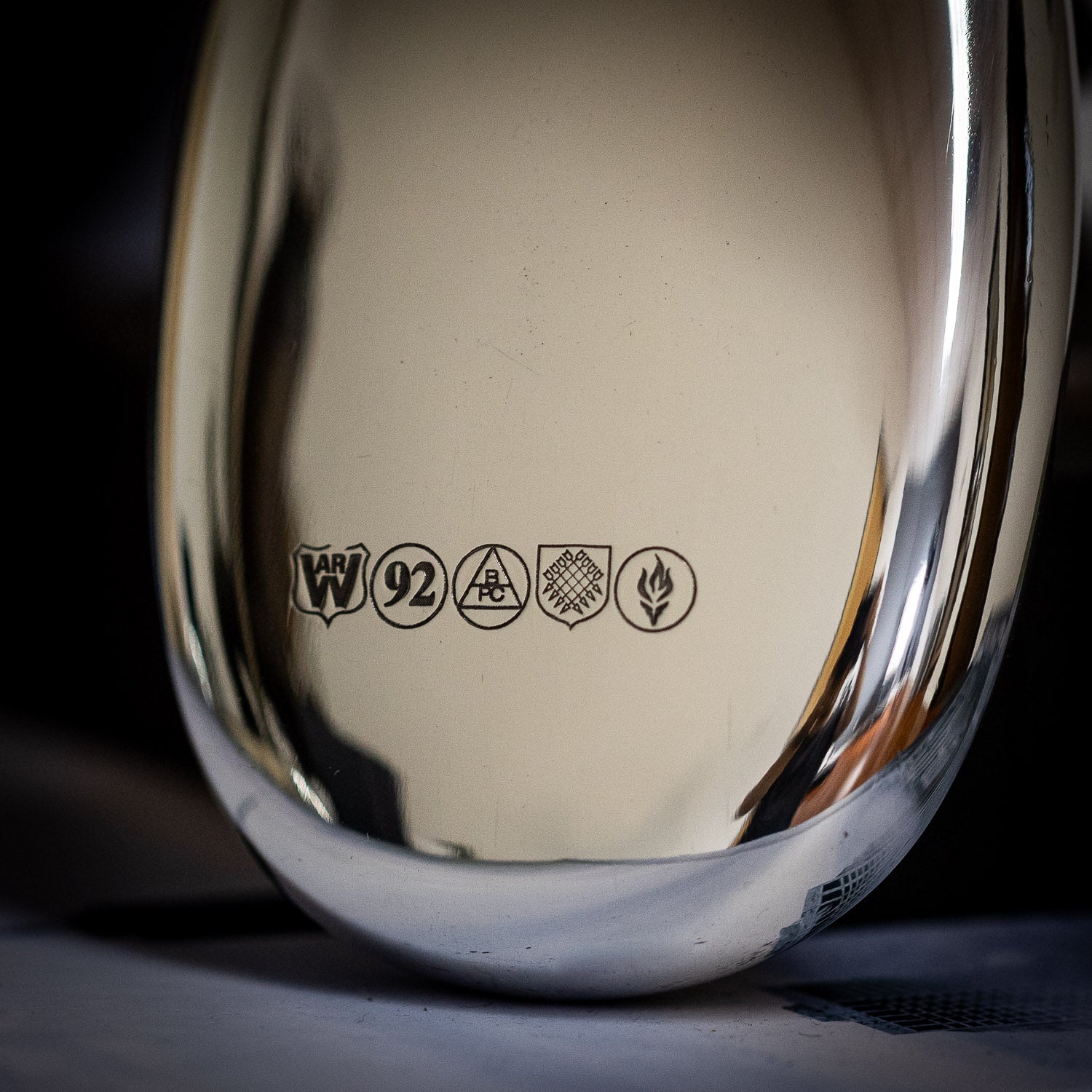
Gold and silver occupy the rarest tier — reserved for objects where craft and value are inseparable. Silver develops a subtle patina over time; gold remains unchanged by age, carrying the same warmth decades later. Pieces in either metal sit at the intersection of EDC and fine jewelry.
Titanium is lightweight, nearly indestructible, and resistant to corrosion. Its natural gray tone can be anodized into deep blues, purples, and golds — a favorite canvas for makers who want color without paint or coating.
Zirconium, when heat-treated, develops a deep, almost black oxide layer that is extraordinarily hard and visually striking — producing some of the most commanding pieces in the EDC world.
Mokume-gane is the pinnacle of material craft — a Japanese technique dating to the 17th century, bonding multiple layers of different metals until the surface reveals a wood-grain or water-pattern unique to that single piece. No two objects are identical.
The material an object is made from is not just a spec on a product page. It is a philosophy.
A refined carry does not happen all at once. It is built gradually, each piece chosen with intention. These are the categories worth getting right.
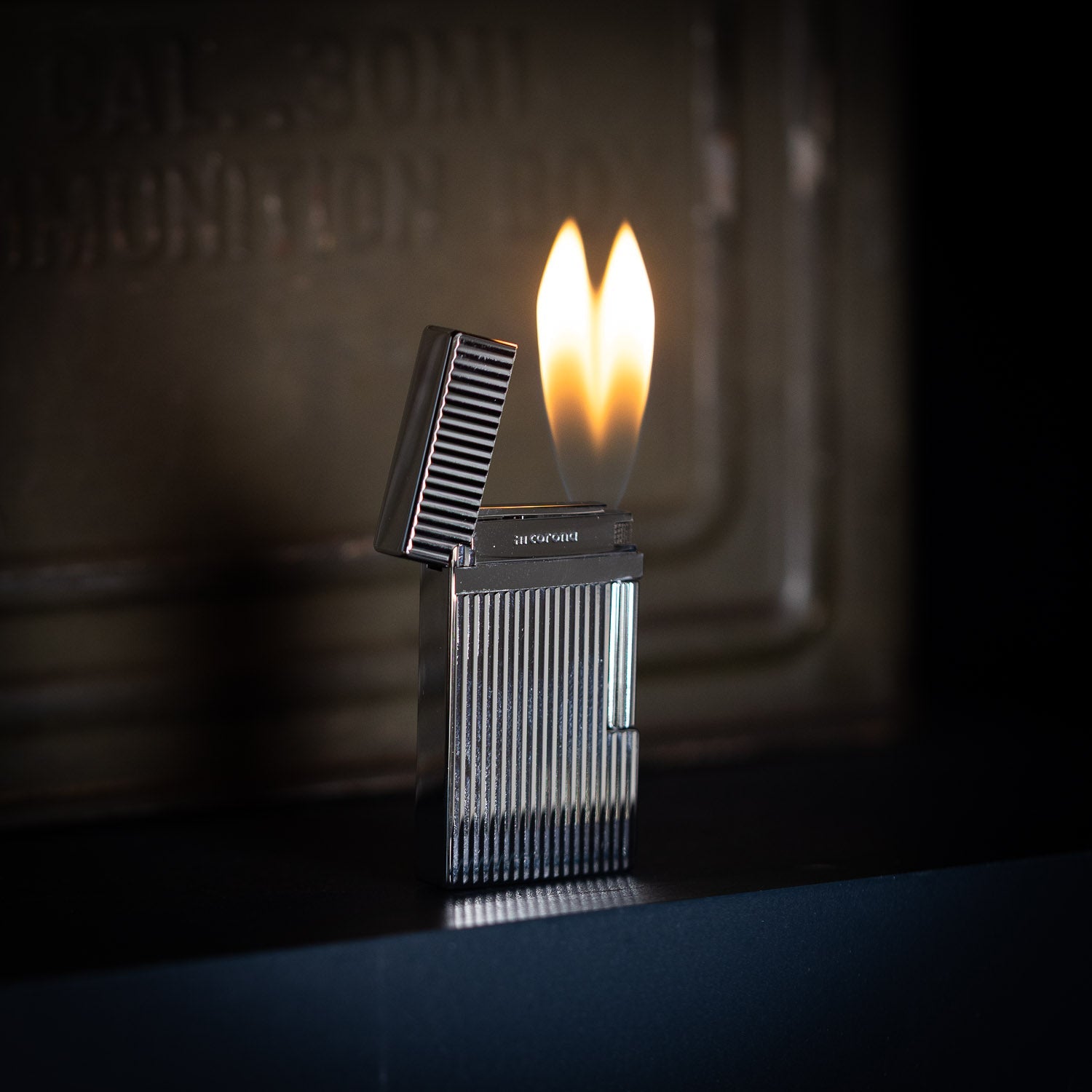
Lighters are among the most tactile objects in any carry. The click of a well-made lighter is immediately recognizable — solid, deliberate, nothing rattling or giving way. The finest lighters develop character with use, while precision machined designs elevate what most people treat as disposable into something worth keeping for life. It's more than a lighter being "fancy" - it's about a piece that will be reliable by your side and get better and better with age.
Pocket knives are the backbone of functional EDC. At the luxury level, the distinction is in the action — a blade that deploys smoothly and locks with authority — and in the materials: premium steel, sculpted handles in titanium, carbon fiber, or exotic wood.
Flashlights are perhaps the most underappreciated category in EDC. Precision machined in brass or titanium, a quality light is compact, extraordinarily reliable, and built to last decades. The appeal is in the engineering — tight tolerances, a quality beam, and a switch that clicks with purpose.
Fidgets exist purely for the pleasure of handling them — and for that reason, they are often where makers push the boundaries of material and craft the furthest. A precision machined fidget in your choice of precious metal is a one-of-a-kind conversation starter and perhaps the purest expression of luxury EDC: something you don't need, but can't imagine not having.
The mistake most collectors make early on is trying to do everything at once. A full luxury carry does not arrive in a single order — it accumulates, slowly and deliberately, which is part of what makes it meaningful.
Start with one category. Pick the object you reach for most in daily life and find the best version of it you can justify. A lighter if you smoke or simply appreciate the ritual. A knife if utility drives you. A pen if you write by hand. Own that piece long enough to understand what you love about it and what you would do differently — that knowledge shapes every purchase that follows.
From there, let the collection grow one piece at a time. Each addition should feel considered, not impulsive. The goal is not a full set — it is a carry where every object has earned its place. Some collectors spend years on a single category before moving to the next. Others rotate pieces in and out until the right combination reveals itself.
The patina on a brass lighter, the smoothness of a broken-in knife action, the way a familiar object settles into your hand — these things take time. So does a collection worth carrying.
Something has shifted. In a market flooded with mass-produced everything, a growing number of people are quietly opting out — choosing to own fewer things, but better ones. Luxury EDC sits at the center of that movement.
Part of it is a reaction to disposable culture. When everything is cheap, replaceable, and designed to be forgotten, there is something quietly radical about carrying an object built to last a lifetime. A well-made lighter or knife does not end up in a landfill. It gets passed down.
Part of it is community. The EDC world has developed a passionate, knowledgeable following — on forums, on Reddit, at trade shows — where collectors share finds, debate materials, and celebrate makers who are doing things the right way. It is a hobby that rewards curiosity and punishes superficiality, which tends to attract a certain kind of person.
And part of it is the hunt. In a sea of identical products, finding a one-of-a-kind piece in mokume-gane or hand-finished copper — something that no one else is carrying — satisfies something that mass retail never can. Luxury EDC is not about status. It is about knowing exactly what you have, why you chose it, and what went into making it.
That is a feeling that does not go out of style.
Everyday carry, at its finest, is a practice in paying attention. To the objects around you, to the craft behind them, and to the quiet satisfaction of reaching for something that feels exactly right. It does not require a large collection or an unlimited budget — it requires only the willingness to be selective.
Start with one piece. Learn what it is made of and why. Carry it long enough to let it become yours. Then let the collection grow from there, slowly and deliberately, the way anything worth having tends to.
The luxury EDC world is smaller than it looks from the outside and more welcoming than most hobbies. There are makers doing extraordinary work, materials worth understanding, and objects out there that will outlast you if you let them.
Last Manner exists for exactly that kind of collector. The rest is up to you.
It depends on what you value. Brass and copper are beloved for the patina they develop over time — each piece becomes uniquely yours with daily use. Titanium is the choice for those who prioritize lightweight durability. And for something truly rare, zirconium and mokume-gane represent the pinnacle of EDC material craft. There is no single best — only the material that fits how you carry and what you appreciate.
A well-made EDC object is not a purchase — it is a replacement for dozens of cheaper ones. A precision machined lighter or a quality pocket knife, properly maintained, will outlast anything mass-produced many times over. When you factor in longevity, the satisfaction of daily use, and the fact that many pieces hold or increase their value over time, the math tends to favor quality.
Start with the object you reach for most in daily life and find the best version of it you can. One piece, one category. Learn what makes it exceptional — the material, the maker, the mechanism. Let that knowledge guide the next purchase. A great collection is built slowly, and that is exactly what makes it great.
About Last Manner
Known for their carefully curated gifts made by expert craftspeople from around the world, Last Manner has been the home for sophisticated, boutique luxury accessories since 2023.


