



Modern Classics: A Closer Look at the Kiribi Lighter Collection
|
Time to read 6 min

|
Time to read 6 min
The Kiribi lighters collection represents the perfect balance of Japanese craftsmanship and timeless design.
With sleek profiles, precision ignition, and thoughtful engineering, each model — from the compact Kenshi to the iconic Kabuto — offers a refined experience for those who value both function and form in a luxury lighter.
In this article, we take a closer look at what sets Kiribi apart — from the brand’s commitment to quality materials like brass and steel, to the ergonomic design details that elevate each model. Whether you’re a seasoned pipe smoker or simply appreciate beautifully made accessories, the Kiribi collection offers a lighter for every discerning taste.
Table of Contents
Explore the heritage and precision behind Japan’s most iconic butane lighters.
From the sleek Kenshi to the sculptural Kabuto, Kiribi lighters blend form and function beautifully.
Built for pipe smokers and design lovers alike, Kiribi turns lighting a flame into a ritual.
Kiribi lighters are built from brass, steel, and die-cast metal components — materials chosen for longevity and hand-feel, not cost savings. The difference is immediate when you pick one up: the weight is intentional, the balance is considered, and nothing moves that isn't supposed to. These are not throwaway lighters.
Each lighter is hand-assembled in Japan. The internal mechanics — precision-fit components, smooth ignition, clean flame control — are engineered to the same standard as the exterior.
Finishes include polished chrome, silver, matte black lacquer, and tsuchime, the traditional Japanese hammered texture applied in both raw brass and lacquered black. The result is a piece that holds up to scrutiny from every angle, inside and out. It's not just a fancy lighter, it is a precise and thoughtful piece ready at your side whenever you need it.

Kiribi lighters draw their visual language from early 20th-century design — particularly the bold geometry and ornamental precision of Art Deco. Clean lines, fluted surfaces, and sculptural ignition levers give each model the quality of industrial art: purposeful in form, considered in detail. It's a design sensibility that sits comfortably between vintage and contemporary without belonging entirely to either.
The name "Kiribi" itself references a traditional Japanese fire-starting ritual, and that heritage runs through every aesthetic decision. These are not lighters styled to look interesting — they're objects where the visual choices and the functional ones are the same choices. Whether finished in tsuchime hammered silver, matte black lacquer, or polished chrome, each variant reads as a complete and deliberate object rather than a base model with cosmetic options.


The story of Kiribi lighters begins with an ancient Japanese tradition — the act of striking flint to create a spark on a traveler’s back, a ritual believed to ward off evil and bless their journey. This custom dates back centuries and is famously tied to the 8th-century legend of Prince Yamatotakeru, who was gifted a firestone and striker by his aunt. According to folklore, that spark would one day save his life. It is from this practice — the original “kiribi” — that the modern brand draws its name and symbolic identity.
In a more modern context, Kiribi is an offshoot of Tsubota Pearl, a Japanese company with a long heritage in crafting fine metal goods and lighters since 1952. While Tsubota Pearl’s designs have long been associated with sleek minimalism and utility, Kiribi emerged as a more specialized line focused on pipe smokers, collectors, and enthusiasts who value tradition, tactility, and fine detail.
By blending historical symbolism with industrial precision, Kiribi has created something rare: a lighter that feels at once ancient and modern. It honors the ritual of lighting a flame — not just as a means to an end, but as a moment of ceremony and personal expression.

Kiribi lighters run on butane with an adjustable flame height, a reliable refill valve, and a flint-based ignition system with easily replaceable flints. The mechanics are built to be serviced rather than discarded — which is the point. These are not gadgets with a planned lifespan. They're tools.
The ignition is smooth and consistent, the flame control is precise, and the construction is robust enough to outlast disposable alternatives by years. With proper maintenance — periodic refilling, flint replacement, occasional cleaning — a Kiribi lighter holds up indefinitely. That's what you're paying for.

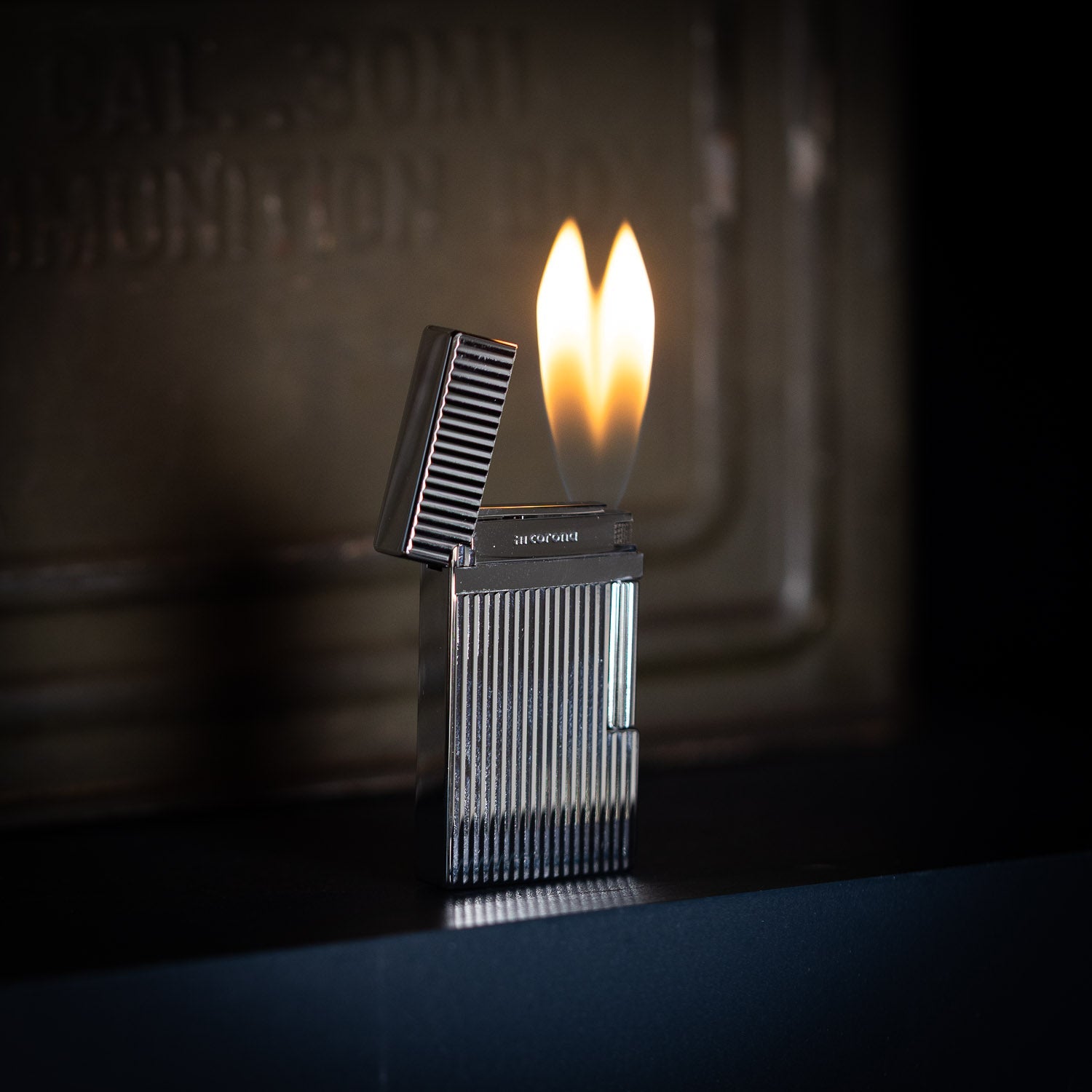
Kiribi lighters are purpose-built for pipe smokers. The signature feature is the angled dual soft flame — positioned to enter the bowl from above at a natural downward angle, giving you precise ignition without scorching the rim or burning your fingers. It's a meaningful departure from standard vertical lighters and torch-style alternatives, which offer far less control over where the flame actually goes.
The wide, stable base lets the lighter rest on a table or pipe tray between lights. The tactile flint ignition delivers a satisfying, consistent strike. These details aren't incidental — they reflect a lighter designed around the specific ritual of pipe smoking rather than adapted to it.

While all Kiribi lighters share the same attention to detail, materials, and flame quality, the Kenshi and Kabuto models offer two distinct personalities — each tailored to different preferences in form, feel, and function.
The Kiribi Kenshi is the more compact of the two. Slim, minimalist, and pocket-friendly, it features a flat-top design with clean, modern lines. It’s ideal for those who value a lighter that disappears into a jacket pocket or pipe pouch, while still delivering the same angled dual-flame performance and butane reliability. The Kenshi is subtle but serious — a low-profile tool for daily use.
By contrast, the Kiribi Kabuto has a more sculptural silhouette. Its arched ignition lever — reminiscent of a samurai helmet, or kabuto — adds a distinctive visual and tactile flair. Slightly larger and more substantial in the hand, the Kabuto has a stronger presence and leans more decorative while remaining fully functional. If you enjoy statement pieces and appreciate design with historical nods, the Kabuto will likely resonate.
Both models share the same refillable, flint-ignition system and premium construction. Your choice comes down to style and scale — do you want something sleek and streamlined, or bold and iconic?


Kiribi lighters stand at the intersection of form, function, and heritage — a rare blend of craftsmanship and culture in an everyday object.
Whether you’re lighting a pipe, marking a moment, or simply appreciating the tactile joy of a well-made tool, a Kiribi lighter transforms a simple gesture into a small ritual. Rooted in centuries of Japanese tradition and elevated by thoughtful design, these lighters are more than accessories — they’re heirlooms in the making.
Whether you prefer the streamlined Kenshi or the bold lines of the Kabuto, every Kiribi model offers lasting value, understated elegance, and the reliability that turns a one-time purchase into a lifetime companion.

Kiribi lighters use Kiribi Flints: Kiribi Flints
We like high quality butane like Xikar or Newport Zero. Both will increase the lifespan of the lighter and make for a smoother lighting experience.
Kiribi is a specialized line created by Tsubota Pearl, a respected Japanese company known for crafting high-quality metal goods and lighters since 1952. While Tsubota Pearl’s products focus on minimalist and modern design, the Kiribi line was developed to cater specifically to pipe smokers and collectors, offering a more robust, vintage-inspired aesthetic with enhanced functionality like angled dual flames and heavier construction.

About Last Manner
Known for their carefully curated gifts made by expert craftspeople from around the world, Last Manner has been the home for sophisticated, boutique luxury accessories since 2023.


